Catch a broken release, then verify the fix
Synthetic demonstration, not customer evidence. These are real Chromium captures and reports from a fictional product page. The test supplies local HTML through an isolated transport; it does not scan the real Example Domain website. No on-chain payment, funded wallet or production API call was used.
Before: FAIL
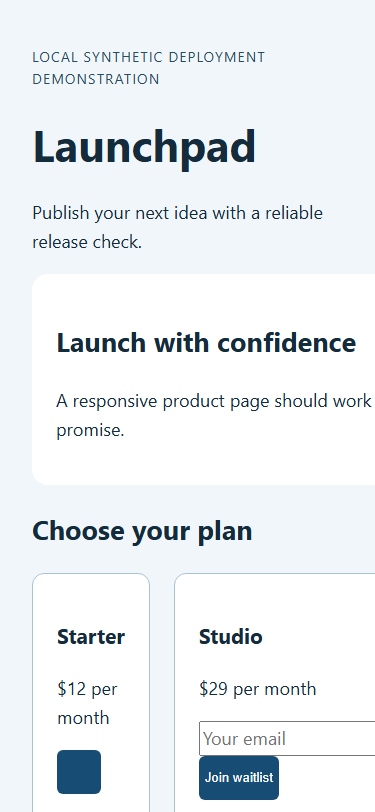
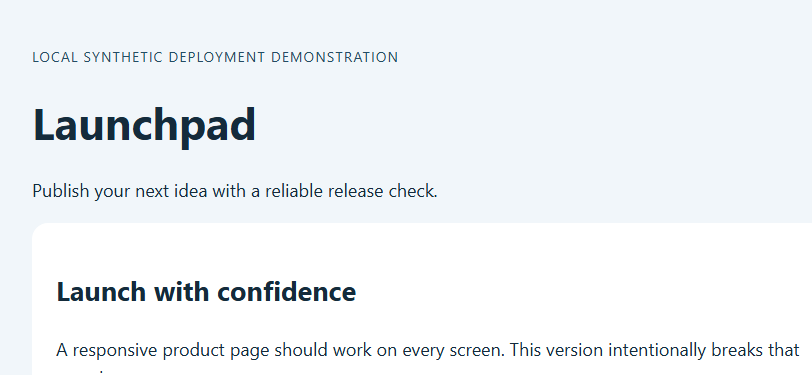
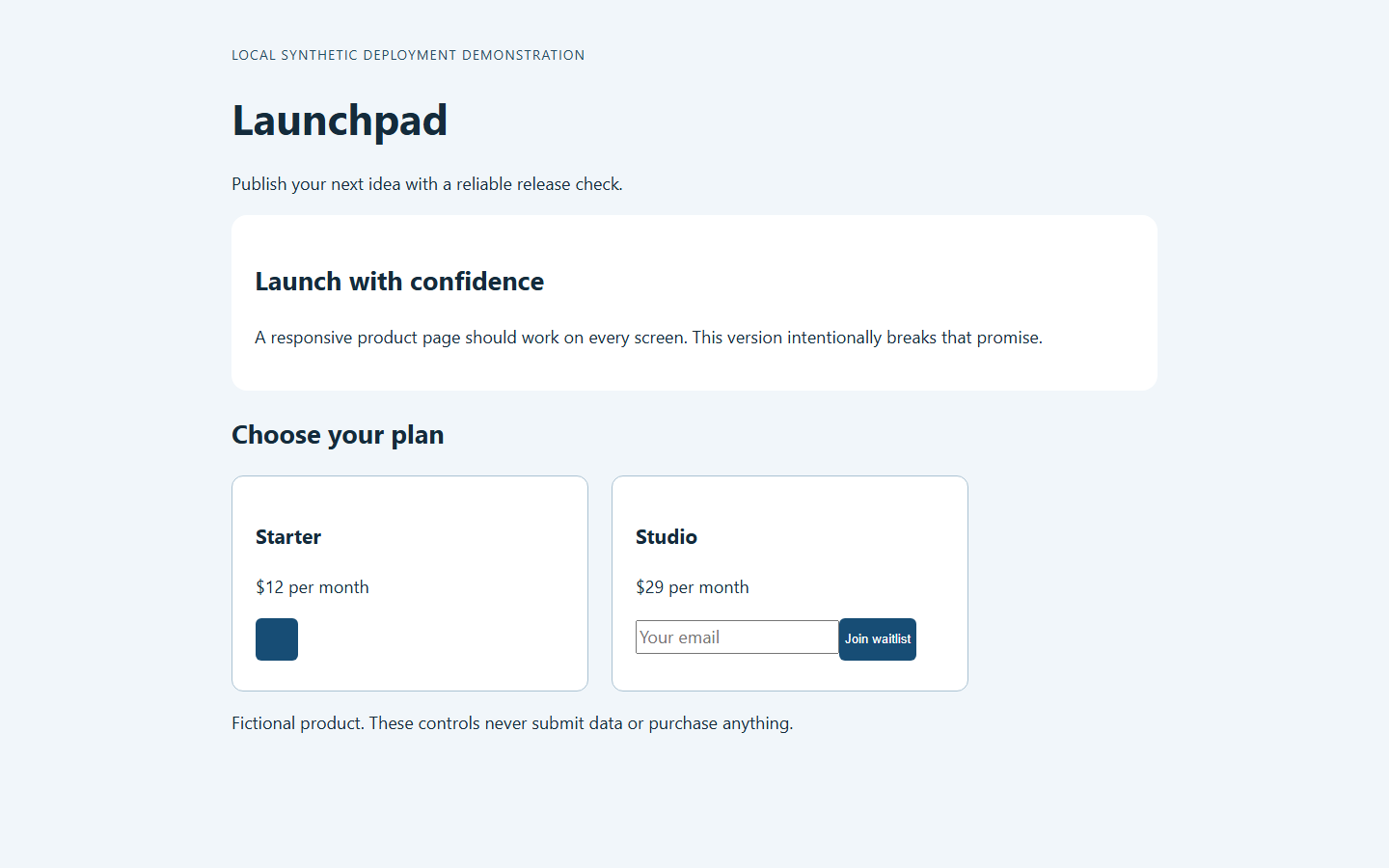
The first release has a fixed-width hero that overflows both phone views, a button without an accessible name, and a JavaScript initialization error. The report found eight blocking observations across the three views, representing three problem types.
- Broken phone portrait (375 × 812)
- Broken phone landscape (812 × 375)
- Broken desktop (1440 × 900)
- Findings and suggested fixes · Full JSON report
What changed
- Removed the fixed minimum width and let plan cards wrap.
- Added an accessible button label and an explicit email label.
- Removed the demonstrated initialization failure.
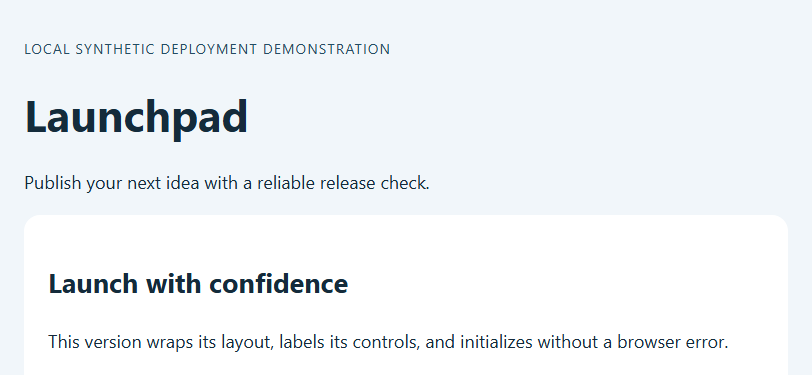
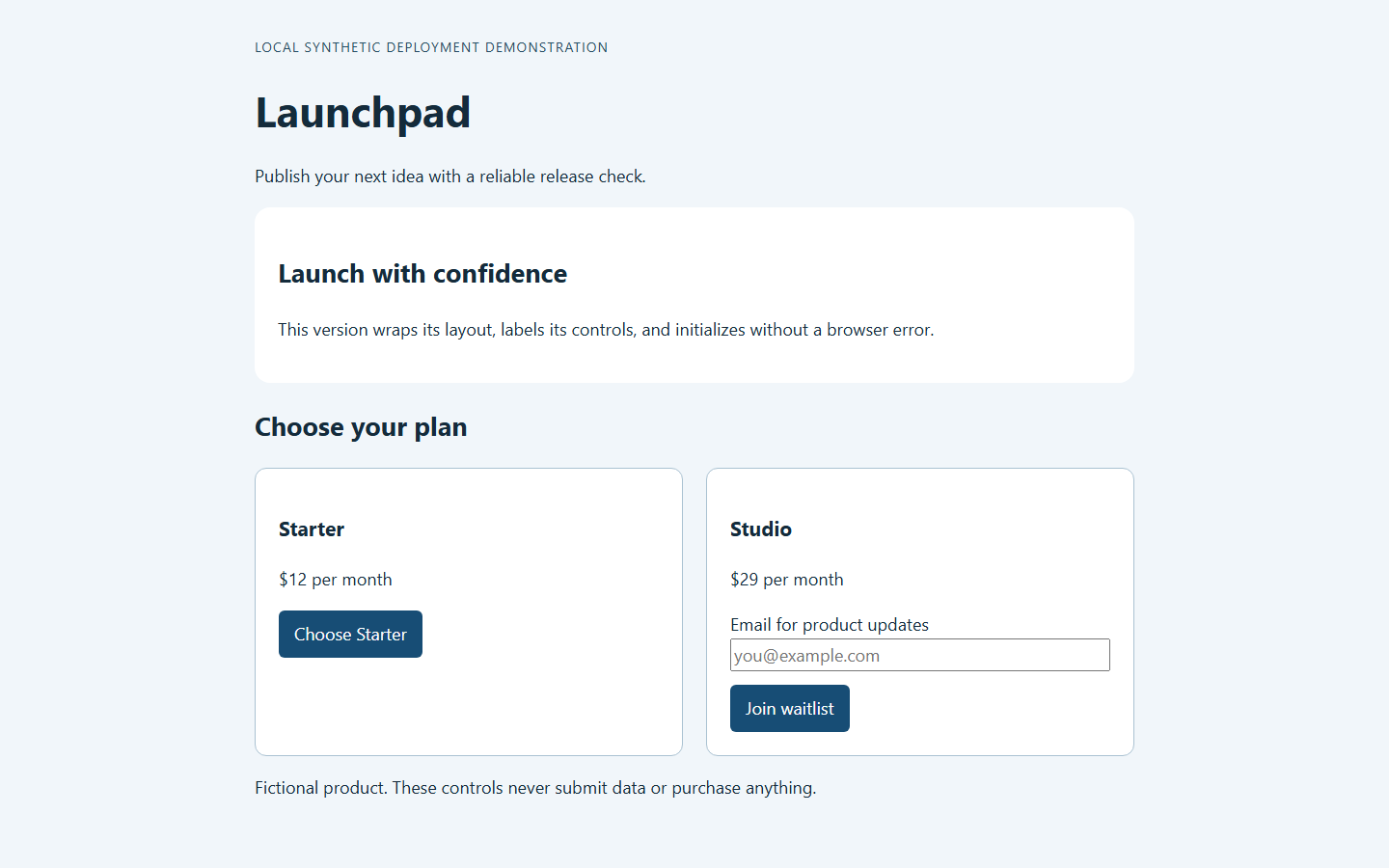
After: PASS
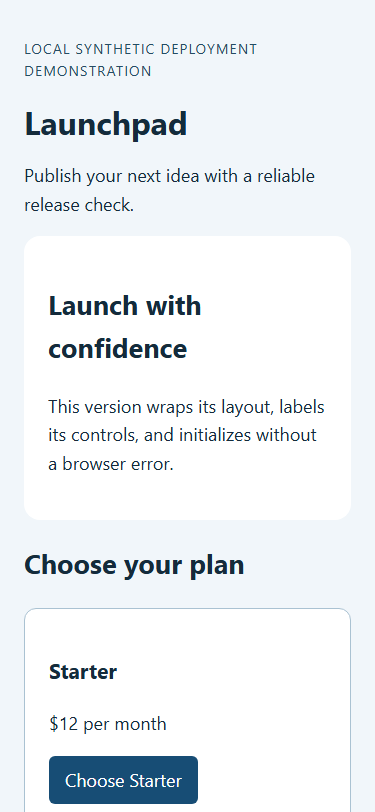
The repeat check found zero blocking issues, zero warnings and no overflow in any view. This is evidence for this fixture at one point in time; it is not a guarantee about other pages or interactions.
- Fixed phone portrait (375 × 812)
- Fixed phone landscape (812 × 375)
- Fixed desktop (1440 × 900)
- Repeat-check result · Full JSON report
The buyer workflow tested
Discovery, an unpaid quote, explicit bounded authorization through the real Base x402 SDK, accepted jobs, asynchronous polling, browser reports, and resuming without another authorization. Two cryptographic signatures were verified locally; payment acceptance was simulated and no funds moved.
Read the proof and limitations. Run the same isolated demonstration from a development checkout with npm run demo:buyer.
Try your deployment
One standard public-page check costs $0.08 USDC. Start with an unpaid one-command preview. An existing signing-capable wallet and explicit spending approval are needed for execution. Public HTTPS pages only.